How to Read a Dog Food Label: What the Ingredients Actually Mean
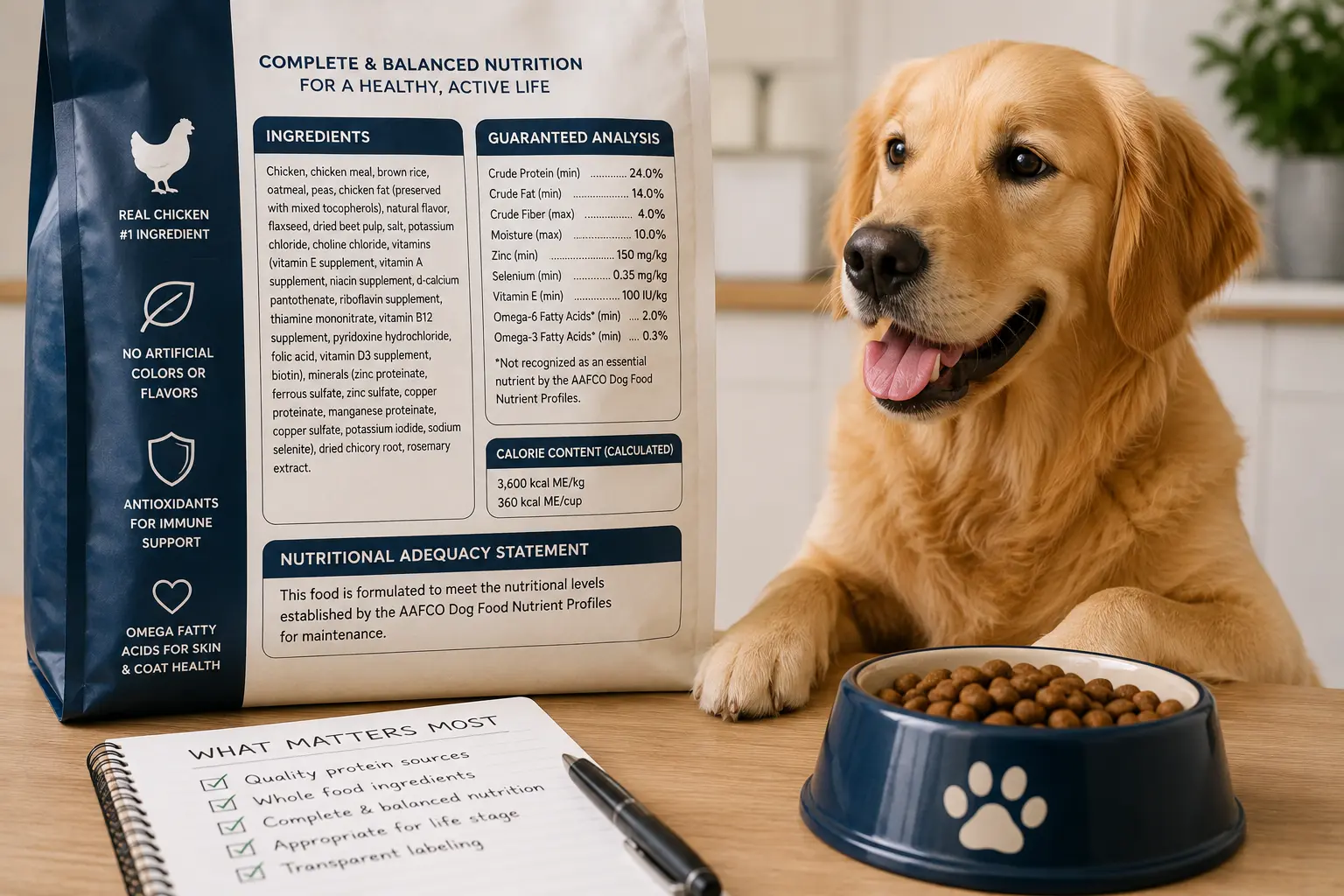
Dog food labels can look impressive on the front of the bag, but the front is mostly marketing. The useful information is usually on the ingredient list, the guaranteed analysis, and the nutritional adequacy statement.
If you learn how to read those three sections, you can compare foods more confidently and avoid being distracted by buzzwords like “premium,” “natural,” or “grain-free.”
Why the label matters
The label tells you more than the packaging slogan ever will. It can help you understand whether a food is complete and balanced, what kind of protein it uses, and whether the product is formulated for a specific life stage.
That does not mean the label tells you everything. Ingredient quality, digestibility, and suitability for your individual dog still matter, which is why the label should be the start of your evaluation, not the end.
How ingredient lists work
Ingredients are usually listed by weight before cooking, not after. That means high-moisture ingredients like fresh meat can appear earlier on the list than more concentrated ingredients like meat meal, even if the final product contains less of the fresh ingredient after processing.
This is why “chicken first” is not automatically better than “chicken meal first.” Meat meals are concentrated sources of protein because much of the water has been removed.
A good rule is to look for a clearly named animal protein source, such as chicken, salmon, lamb, or beef, rather than vague wording like “meat meal” or “animal derivatives.”
Ingredients worth understanding
Meat meal is not a junk ingredient. It is a rendered, dried protein source that can provide a strong nutritional profile when the species is clearly named.
By-products are not automatically bad either. They can include organ meats and other nutrient-rich parts of the animal that are safe and useful in pet food. Transparency matters more than the label sounding familiar.
Ingredients that are more questionable include vague unnamed protein sources, heavy use of artificial colours, and unnecessary sweeteners or preservatives. Some owners also prefer to avoid foods that rely heavily on marketing claims rather than clear nutritional detail.
What guaranteed analysis tells you
The guaranteed analysis gives minimum protein and fat, plus maximum fibre and moisture. It helps you compare broad nutrient levels, but it does not tell you the quality or digestibility of those nutrients.
If you want to compare wet and dry food fairly, use dry matter basis. A simple way to think about it is this: remove the moisture from the equation so you are comparing nutrients on the same scale.
The adequacy statement
In the United States, look for an AAFCO nutritional adequacy statement. It should tell you whether the food is formulated to meet nutrient profiles or tested through feeding trials.
In the UK and EU, look for FEDIAF guidance. In Australia, check the product’s local compliance information and supporting claims carefully, rather than assuming U.S. terminology applies automatically.
A food that says it is “complete and balanced” is generally more useful than one that only markets itself as natural, premium, or grain-free.
Common label myths
Grain-free does not automatically mean healthier. It may suit some dogs, but it is not universally better, and dietary changes should be based on the dog’s needs rather than marketing trends.
Raw feeding is another example where the label alone does not settle the question. Some owners prefer it, but it carries handling and balance concerns, so it should be approached carefully and ideally with veterinary guidance.
Feeding instructions on the bag are only a starting point. Your dog’s body condition, activity level, age, and metabolism all matter more than the printed guideline alone.
Frequently asked questions
Is the first ingredient always the most important?
Not always. The first ingredient matters, but you should look at the whole list, moisture content, and the nutritional adequacy statement together.
Are by-products bad?
No. By-products can be nutritious and useful, especially when they are clearly named and come from quality sources.
Is grain-free better?
Not necessarily. Some dogs do well on grain-free diets, but it is not a universal upgrade.
How do I know if a food is complete?
Look for a nutritional adequacy statement that says the food is intended for a specific life stage and meets a recognised standard.