Understanding Dog Health Testing: What to Ask Every Breeder
Health testing is one of the clearest signs that a breeder is serious about producing healthy puppies. It does not guarantee a perfect dog, but it does reduce the risk of avoidable inherited problems and shows that the breeder is thinking beyond a single litter.
If you are buying a dog from a breeder, health testing should never be optional. The right tests depend on the breed, but the principle is the same: test before breeding, not after problems appear.
Why health testing matters
Every breed carries some inherited risk. Over time, selective breeding can concentrate traits that also increase the chance of hip problems, eye disease, heart conditions, or other inherited disorders.
Responsible breeders use testing to reduce those risks where possible. They are not trying to claim their puppies will be flawless; they are trying to make informed breeding decisions that improve the odds of healthier offspring.
The main types of health tests
The exact tests vary by breed, but most fall into a few broad groups:
- Hip screening.
- Elbow screening.
- Eye examinations.
- Cardiac testing.
- DNA tests for inherited conditions.
Hip evaluation is especially important in many medium and large breeds. In North America, OFA and PennHIP are the main systems used. In the UK, the BVA/KC hip scheme is widely recognised. In Australia, look for Dogs Australia / ANKC-recognised schemes and supporting documentation.
What DNA testing can tell you
DNA tests can identify whether a dog is clear, a carrier, or affected for certain inherited conditions. That does not mean every carrier should automatically be removed from a breeding program; the important issue is whether the breeder understands how to pair dogs responsibly to avoid producing affected puppies.
Conditions tested by DNA vary by breed, but may include issues such as progressive retinal atrophy, degenerative myelopathy, MDR1 sensitivity, or breed-specific disorders. A reputable breeder can explain which tests are relevant to their breed and show you the actual results.
How to verify test results
Never rely on verbal claims alone. Ask to see the certificates or ask how the results can be verified through a recognised public database or lab record.
A breeder should be able to tell you:
- what tests were done.
- when they were done.
- what the results were.
- why those tests were chosen for the breed.
- how the results influenced the breeding decision.
If the breeder cannot explain those points clearly, that is a warning sign.
Questions to ask a breeder
Use these questions when discussing a litter:
- Which health tests have both parents had?
- Can I see the actual results?
- Which breed-specific problems do you screen for?
- Why were these two dogs paired?
- Are there any known issues in the parents’ lines?
- Are the puppies raised in a home environment with early socialisation?
The goal is not to interrogate the breeder aggressively. It is to find out whether they breed with care, knowledge, and accountability.
Red flags
Be cautious if a breeder:
- talks about “vet checked” puppies instead of actual health testing.
- cannot explain why certain tests were or were not done.
- refuses to show documentation.
- dismisses breed-specific health concerns.
- claims their lines are “perfect” or “guaranteed healthy.”
A good breeder speaks honestly about risk, not as if risk does not exist.
What buyers should remember
Health testing is only one part of responsible breeding, but it is a major one. A puppy from tested parents may still get sick later in life, and a puppy from untested parents may still stay healthy. But all else being equal, testing improves the odds and shows commitment to the breed’s long-term welfare.
Frequently asked questions
Is health testing the same as a vet check?
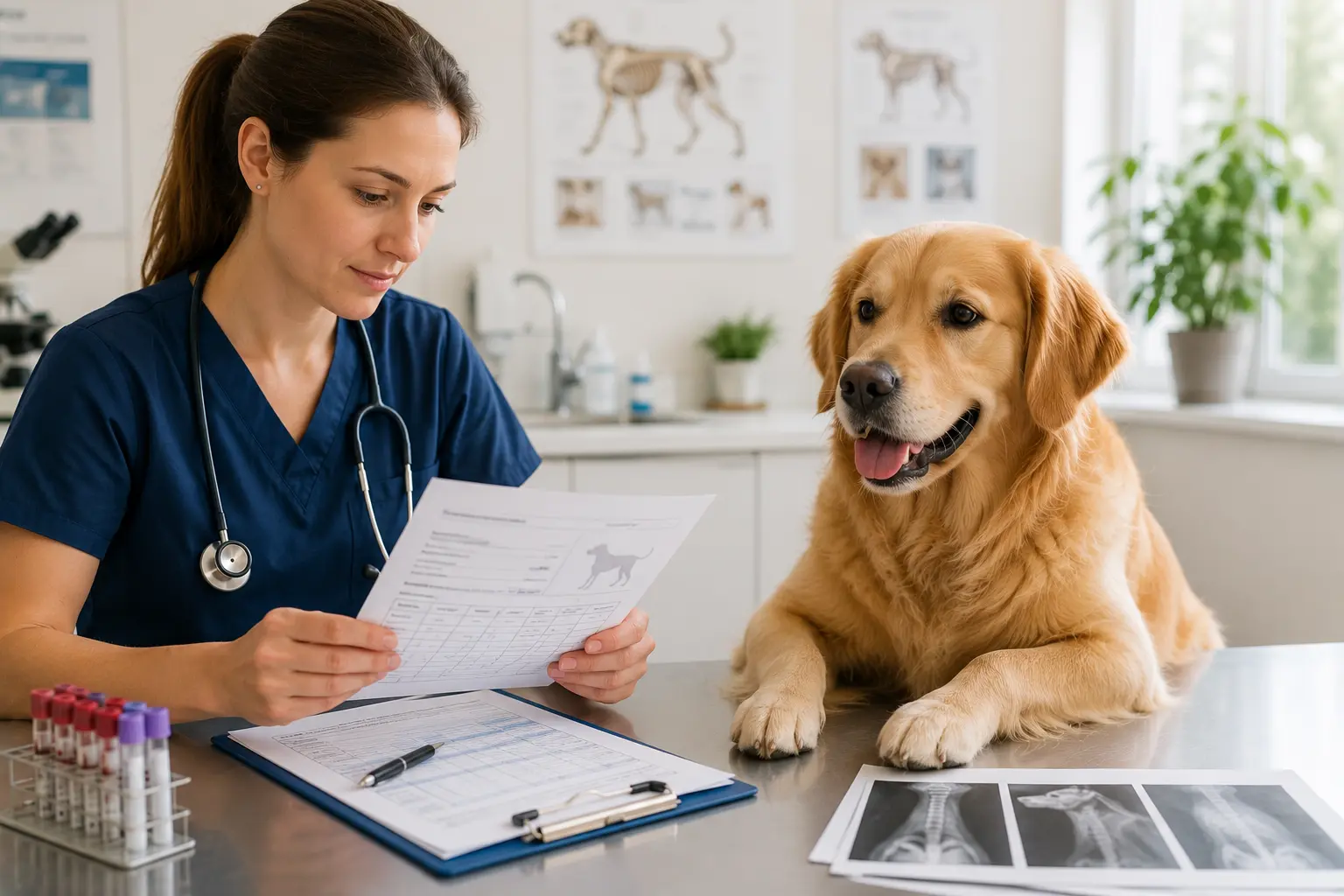
No. A vet check is a general exam, while health testing is a targeted screening for inherited or breed-relevant conditions.
Do all breeds need the same tests?
No. The best tests depend on the breed, size, and known inherited risks.
Can a carrier dog be bred?
Sometimes, yes, if paired carefully with a clear mate and used as part of a responsible breeding strategy.
Where can I check results?
That depends on the country and the test. In many cases, official kennel club or database records can help verify the information.