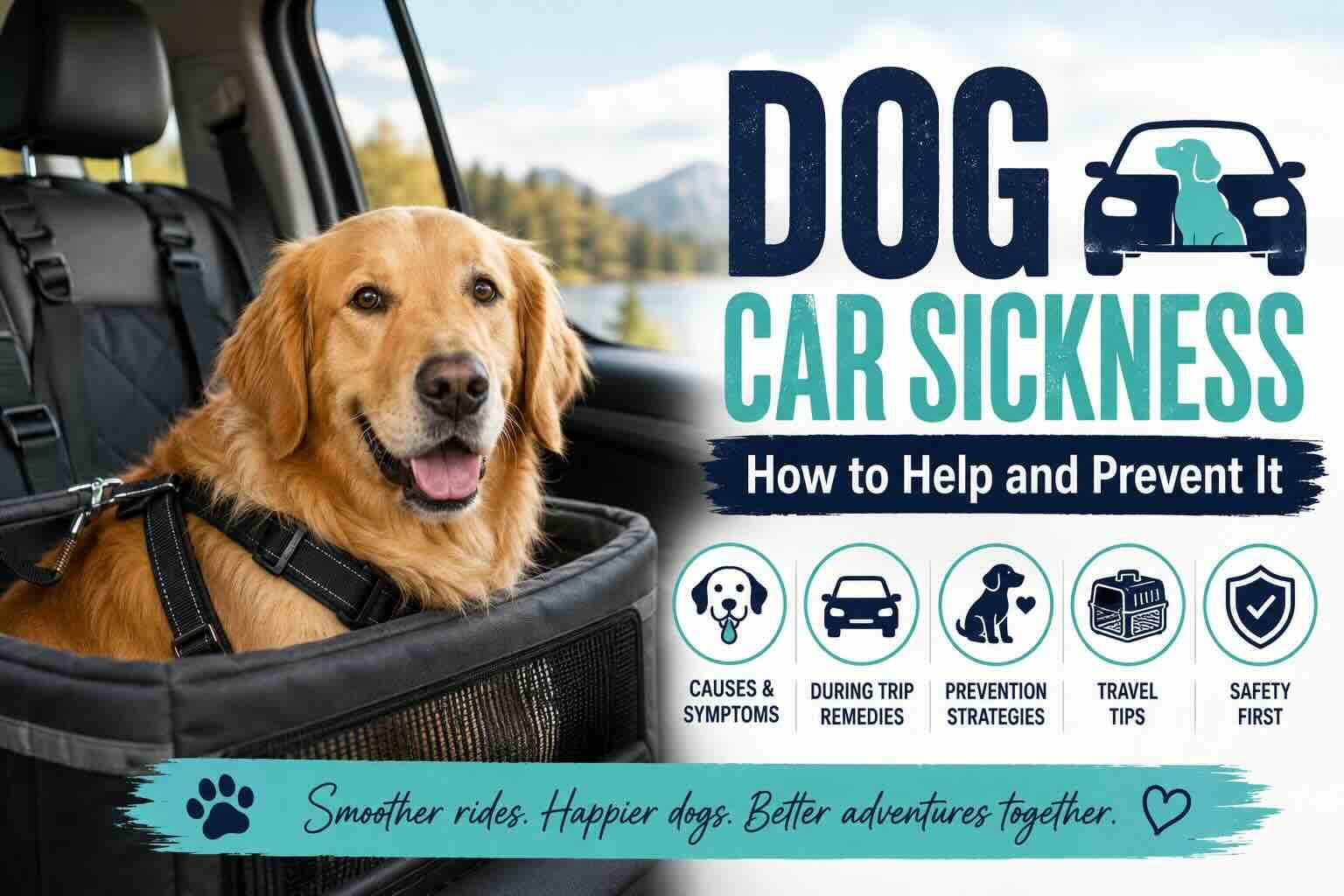
Car sickness is one of the most common travel problems in dogs. Whether your dog drools, pants, trembles, whines, or vomits during car rides, motion sickness or travel anxiety may be responsible. Puppies are especially prone to motion sickness because their inner ear is still developing, while adult dogs may become anxious if they associate the car with unpleasant experiences. Fortunately, with the right preparation, gradual training, and veterinary guidance when needed, most dogs can learn to travel more comfortably.
Why Dogs Get Car Sick
Dog car sickness happens for one of two reasons: motion-related nausea or stress linked to car travel. Veterinary sources note that anxiety is a major trigger, and the two problems often reinforce each other — a dog who has experienced nausea in the car begins to associate the vehicle with discomfort, which raises stress, which then worsens nausea (VCA Animal Hospitals).
Puppies and young dogs are particularly prone because their inner ear balance systems are still developing. Adult dogs who associate the car with unpleasant destinations — such as vet visits — can also experience anxiety-driven nausea even on short trips.
Signs Your Dog May Have Car Sickness
Watch for these symptoms, which can start even before the car moves:
- Excessive drooling or foamy saliva
- Repeated lip licking or swallowing
- Yawning, whining, or panting
- Trembling, shaking, or pressing against the car door
- Vomiting or retching
- Refusing to get into the car at all
How to Help During a Trip
These practical adjustments make a significant difference before and during travel:
- Limit food before travel. Withhold food for 4 to 6 hours before a trip when motion sickness is a concern. A light stomach reduces the severity of nausea (Greencross Vets).
- Keep the car cool and well ventilated. Fresh air from vents or slightly opened windows helps reduce nausea. Hot, stuffy cars make it worse.
- Plan frequent rest breaks. Stop every 45 to 60 minutes on longer trips so your dog can rest, drink water, and step outside.
- Use a secure crate or travel harness. Position your dog in the back seat or cargo area. A crate reduces the visual movement that worsens motion sickness and keeps your dog safe in a sudden stop (PetMD).
- Bring familiar comfort items. A blanket or favourite toy that smells like home can reduce travel anxiety.
| Never leave your dog unrestrained or allow them to hang their head out the window. Both are safety risks for your dog and other road users. |
| Do not give your dog human motion-sickness medication — antihistamines such as Dramamine can be harmful to dogs. Always consult your vet before giving any medication for travel sickness. |
Red Flags: When to Call Your Vet Immediately
Most car sickness is mild and manageable, but contact your veterinarian urgently if:
- Your dog vomits repeatedly and cannot keep water down for more than two hours
- Your dog appears extremely distressed, collapses, or cannot stand after a trip
- You notice bloody vomit or signs of severe dehydration such as sunken eyes or very dry gums
- Your dog is a senior, has a heart condition, or is on regular medication — always check before any travel
How to Prevent Car Sickness Long-Term
The most effective long-term approach is gradual desensitisation. VCA, Greencross Vets, and PetMD all recommend building up exposure slowly so your dog learns that car travel is not a threat:
- Sit with your dog in the parked car for five minutes with the engine off. Offer treats and calm praise.
- Start the engine without driving. Let your dog settle.
- Take a very short drive — around the block — and end with something enjoyable such as a short walk.
- Gradually increase the length of trips over two to four weeks, always ending positively.
This method works because it breaks the anxiety loop. Once your dog realises the car does not always lead to a frightening experience, the stress response weakens and nausea often reduces with it.
When to Ask Your Vet for Support
If your dog vomits on most trips, panics, refuses to enter the car, or shows extreme distress, speak to your veterinarian. PetMD notes that some dogs benefit from prescription anti-nausea medication or pheromone-based anxiety support (PetMD, petmd.com). Your vet can tailor treatment to your dog’s age, weight, health history, and travel frequency.
| Australian note — travelling in summer heat |
| Australian summers create an additional risk: car interiors can reach dangerous temperatures within minutes, even when parked in shade. If you are travelling in Queensland, NSW, or WA between November and March, always keep the car air-conditioned, park in full shade, carry extra water, and check the car temperature before placing your dog inside. Signs of heat stress — rapid panting, drooling, and weakness — require immediate veterinary attention. |
| Products that can help with dog car sickness |
| Well-ventilated travel crate for anxious or small dogs (e.g. MidWest iCrate, Diggs Revol) |
| Crash-tested car harness for larger dogs (e.g. Sleepypod Clickit Terrain) |
| Washable travel seat cover or hammock to protect upholstery |
| Calming pheromone spray for travel anxiety (e.g. Adaptil Spray — vet-approved) |
| Anti-nausea supplements: Cerenia (prescription from vet), or over-the-counter options such as Zesty Paws Calming Bites — always check with your vet first |
| Related reading on All Furry Tales |
| → The First Year of Pet Ownership — Month by Month Guide |
| → How to Manage Pet Separation Anxiety |
| → Pet Travel — Airlines, Road Trips and Accommodation |
FAQs
Can dogs grow out of car sickness?
Many puppies do, as their inner ear balance system matures. Adult dogs with anxiety-based car sickness usually need a training programme. Both groups often improve significantly with the right approach (VCA Animal Hospitals).
Should I feed my dog before a road trip?
A light schedule works better than a full meal. Most veterinary travel advice recommends withholding food for four to six hours before a trip when nausea is a concern (Greencross Vets).
Is dog car sickness an emergency?
Usually no. However, repeated vomiting that leads to dehydration, or extreme distress with loss of balance, should be assessed by a vet promptly.
Is car sickness different in Australia’s heat?
The underlying cause is the same, but Australian summer heat adds serious risk. Always cool the car down before your dog enters, and monitor for heat stress signs on warm days.