
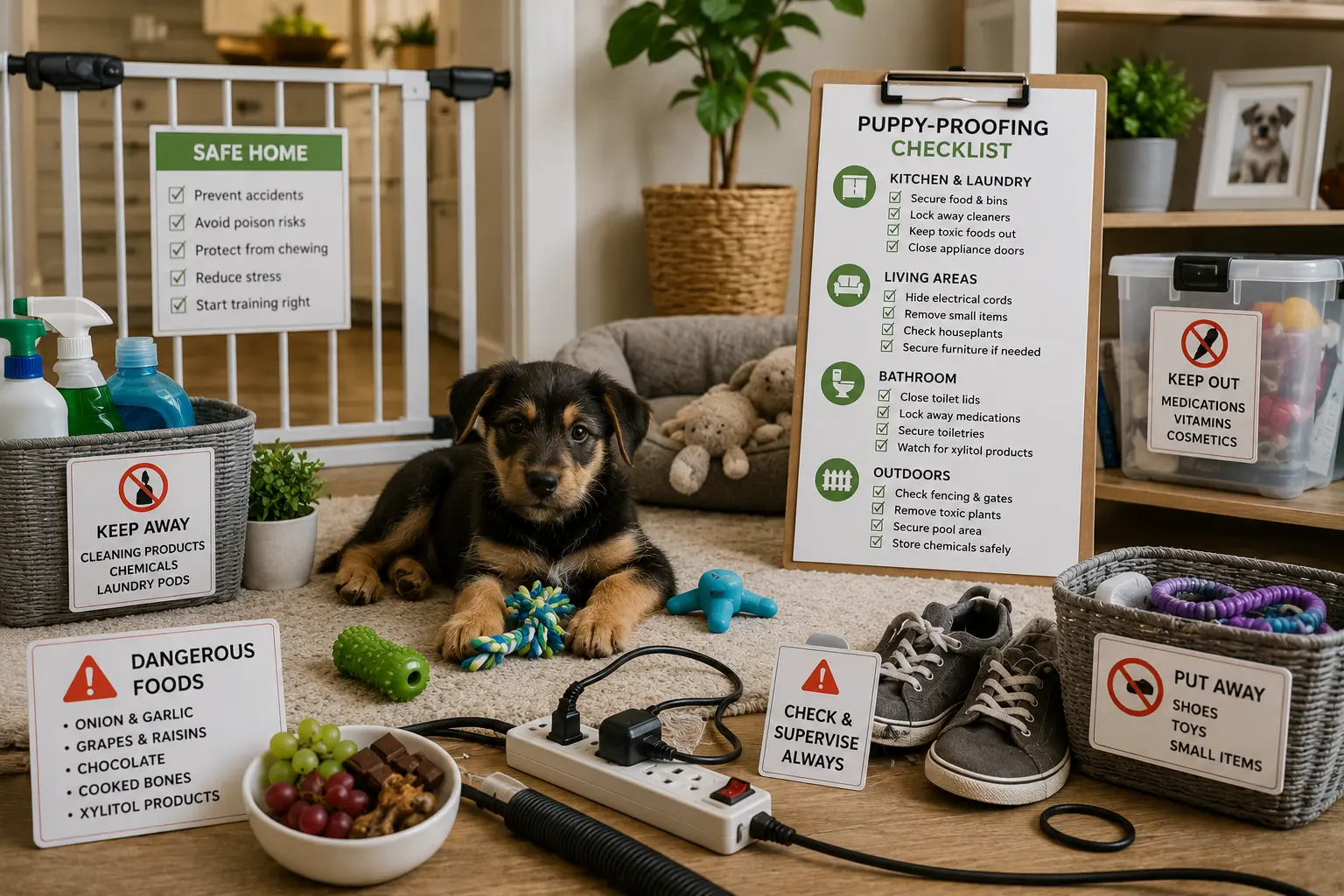
Puppy-Proofing Your Home: The Complete Checklist
Puppy-proofing is one of the most important things you can do before a young dog comes home. Puppies explore with their mouths, have no sense of danger, and can get into trouble faster than most new owners expect.
A safe home makes training easier and reduces the risk of accidents, poisoning, chewing damage, and emergency vet visits.
Before the puppy arrives
Do the prep before the puppy gets home, not after the first problem. Once a curious puppy starts exploring, you will not have much time to react.
Set up a designated safe area first. That might be a crate, pen, or small puppy-proof room with bedding, water, toys, and easy access to a toilet area.
Kitchen and laundry
The kitchen is one of the most dangerous rooms for a puppy. Secure food, bins, detergents, cleaning products, dishwasher tablets, and sharp objects out of reach.
Keep toxic foods away from the puppy, including onion, garlic, grapes, cooked bones, chocolate, and products containing xylitol.
In the laundry, lock away laundry pods, bleach, detergents, fabric softener, and dryer sheets. These items should never be accessible to a dog that likes to chew or explore.
Living areas
Cords are a major risk, so hide or cover all electrical cables. A puppy chewing a live cable can be seriously injured.
Move small items out of reach, including shoes, glasses, remote controls, children’s toys, rubber bands, and hair ties. These are easy to swallow or destroy.
If you have houseplants, check whether they are toxic to dogs. It is safer to move unknown plants out of reach until you know they are puppy-safe.
Bathroom
Keep toilet lids closed. Puppies can fall in and may also drink unsafe water.
Lock away medications, vitamins, cosmetics, razors, and cleaning products. Even small amounts of some human products can be dangerous if swallowed.
Be especially careful with sugar-free products, toothpaste, and anything containing xylitol.
Garden and outdoor spaces
Check your fencing before the puppy arrives. Even a small gap at ground level can be enough for a small dog to slip through.
Make sure gates close properly, and if you have a pool, confirm that it is properly fenced and secured.
Walk around the garden and remove or block access to toxic plants, compost bins, and chemicals. Outdoor safety matters just as much as indoor safety.
Items people forget
These are often overlooked:
- batteries.
- string, ribbon, and hair ties.
- children’s toys.
- remote controls.
- gardening products.
- slug pellets.
- compost bins.
Anything that can be swallowed, chewed, or knocked over should be treated as a risk.
First-week safety habits
Puppy-proofing is not a one-time job. The moment the puppy arrives, supervision and routine become just as important as the physical setup.
Good habits include:
- closing doors and gates.
- putting shoes and bags away.
- checking the floor before letting the puppy roam.
- using a crate or pen when you cannot watch closely.
- keeping cleaning products locked up at all times.
Frequently asked questions
Do I need to puppy-proof every room?
Yes, at least the rooms the puppy can access. The safest approach is to prepare all accessible areas before arrival.
Is puppy-proofing only for puppies?
No. Young dogs and even adult dogs with chewing habits can get into trouble if the house is not secure.
What is the biggest mistake new owners make?
Leaving dangerous items in easy reach and assuming they will have time to react. With puppies, prevention is always easier than correction.
Should I buy special safety products?
Sometimes. Baby gates, cord covers, latches, pens, and crates can all help create a safer environment.