
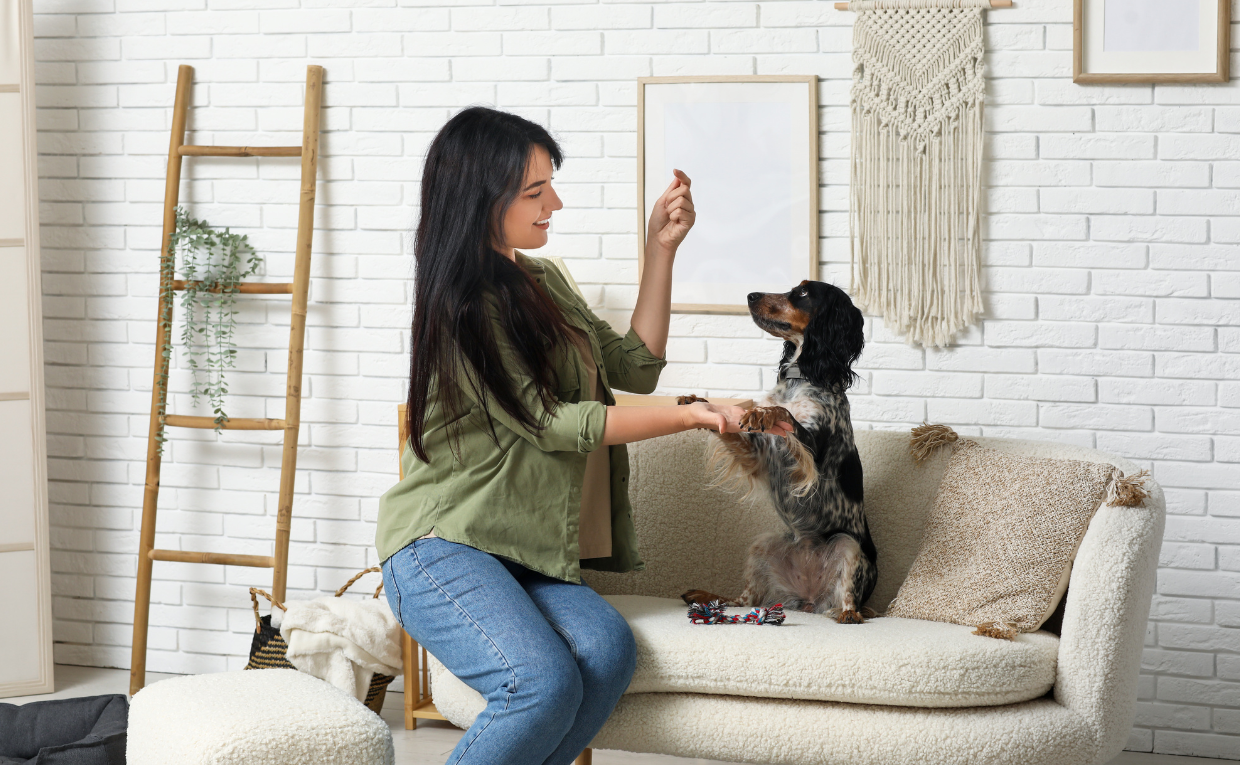
Training your pet at home is more than just teaching tricks — it’s about building a lifelong bond based on love, communication, and respect. Whether you want them to behave propery in public, or you’re welcoming a new puppy, changing their chewing habits, or helping your pet adjust to a growing family, consistent training helps them understand what’s expected and ensures harmony in your home.
The Foundation: Routine and Positive Reinforcement
Every successful training journey begins with structure. Pets, like children, thrive when their world is predictable. Feeding, playtime, walks, and naps should happen at similar times each day. This routine helps your pet feel secure and makes it easier for them to learn new behaviors.
When starting, focus on positive reinforcement. Praise, treats, and affection immediately after good behavior tell your pet they’ve done the right thing. Even when things go chaotic sometimes, and they refuse to follow you, avoid punishment — it breeds fear, not obedience. Instead, reward progress, however small, and you’ll see consistent improvement.
Preparing for Changes at Home
Training becomes even more important when your household dynamics change. For instance, dogs can be trained for medical aids as support. Pets incredibly intuitive and can sense new emotions and routines before you even introduce them. Hence, it is wise to introduce them to the new changes in the family gently.
By maintaining consistent commands and calm energy, you help them feel secure during this transition. Simple cues like “sit,” “stay,” and “wait” teach pets to respect boundaries while still feeling included in family life. Structured training before the big change minimizes stress and anxiety later on.
Teaching Basic Commands
Start with the essentials — “sit,” “stay,” “come,” and “leave it.” These commands form the foundation of safe and polite behavior. Use short, cheerful sessions and a calm tone.
- Say “sit,” guide your pet gently into position, and reward immediately.
- For “stay,” step back gradually, rewarding when they hold position.
- Always end training on a positive note so your pet associates learning with happiness.
Cats can learn, too — use small bites of tuna or chicken and short. Also use clicker at the time of trainug. Five-minute sessions. Repetition and consistency turn curiosity into understanding.
Manners Begin at Home
Teaching boundaries at home makes life smoother for everyone. Your dog should know where to rest, when to wait quietly, and not to jump on guests. Cats should understand where scratching and climbing are acceptable.
Redirect unwanted behavior rather than scolding. For example, if your cat scratches your sofa, move them to a scratching post and reward their action. Over time, they’ll associate that area with positive reinforcement.
Potty Training and Clean Habits
Clean habits are vital for a peaceful home. It is important that you teach your pets about the right ways of going to poo. A structured potty training emphasizes on how timing and consistency help pets learn where and when to go.
Take your dog to the same spot after meals and naps. For cats, maintain a quiet, accessible litter area and keep it clean. Never punish accidents — it only creates confusion. Instead, reward correct behavior and use cleaners that remove odor completely.
Stimulating the Mind to Prevent Boredom
Mental stimulation is as important as physical exercise. Without it, pets often resort to destructive behavior like chewing or scratching. Chewing Issues in Cats can be from boredom and stress are key triggers.
Rotate toys, hide treats, and use puzzle games that challenge their intelligence. Dogs love searching games, while cats enjoy hunting-style play that taps into their instincts. Providing safe outlets for energy keeps your pet engaged, happy, and far less likely to chew furniture or cables.
Socialization and Outdoor Confidence
Good home training naturally extends outdoors. Training about Public Behavior is necessary as gradual exposure helps pets feel calm in unfamiliar situations.
Once your pet listens reliably indoors, begin introducing them to new environments — quiet streets, parks, or short car rides. Stay calm and use reassuring tones. Reward calm behavior and ignore distractions. Over time, they’ll associate new places with fun and safety.
The Role of Patience and Emotional Connection
Patience is the most powerful training tool of all. Every pet learns at a different pace. Some grasp commands in days; others take weeks. Celebrate small victories and keep your emotions positive.
Your energy directly affects your pet’s behavior. If you stay calm, they will too. Speak with warmth, keep sessions lighthearted, and let your bond guide your progress. Over time, obedience becomes trust — and trust becomes love. The pets will gradually enjoy every moment interacting with you.
Training your pet is not just about control but communication. Every “sit,” “stay,” and “come here” strengthens the invisible thread that ties you together.
Final Thoughts
Home training lays the foundation for a well-adjusted, confident, and loving companion. With structure, patience, and consistent positive reinforcement, your pet learns how to fit harmoniously into your lifestyle.
Training is not just about teaching commands — it’s about understanding emotions, building respect, and creating joyful moments together. Whether it’s preparing for family changes, solving chewing issues, improving public manners, or simply sharing quiet time, every session strengthens the relationship that makes life with pets so special.
Affiliate Disclosure: This article contains affiliate links. As an Amazon Associate, All Furry Tales earns from qualifying purchases, at no extra cost to you.